


The Meaning of the Reliefs of Prambanan Temple, Closely Linked to the Ramayana Story
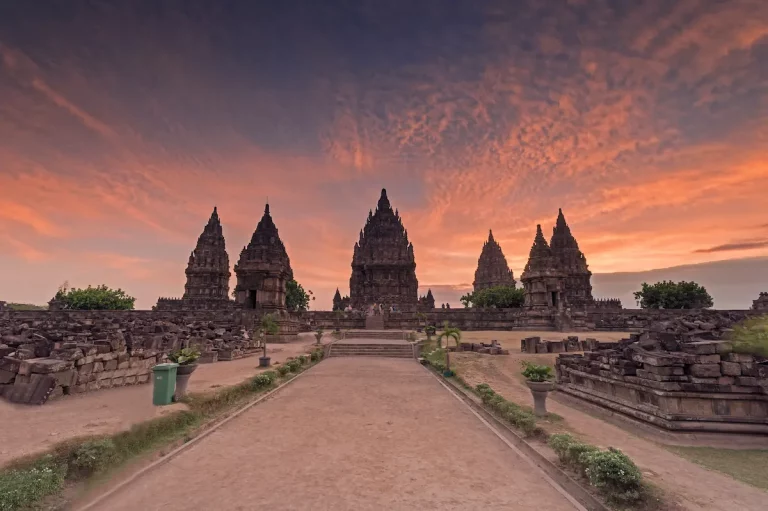
Prambanan Temple is the largest Hindu temple in Indonesia which has been designated as a UNESCO World Heritage Site since 1991. This structure not only presents the splendor of historical traces, but also holds romantic and heroic stories in its wall reliefs.
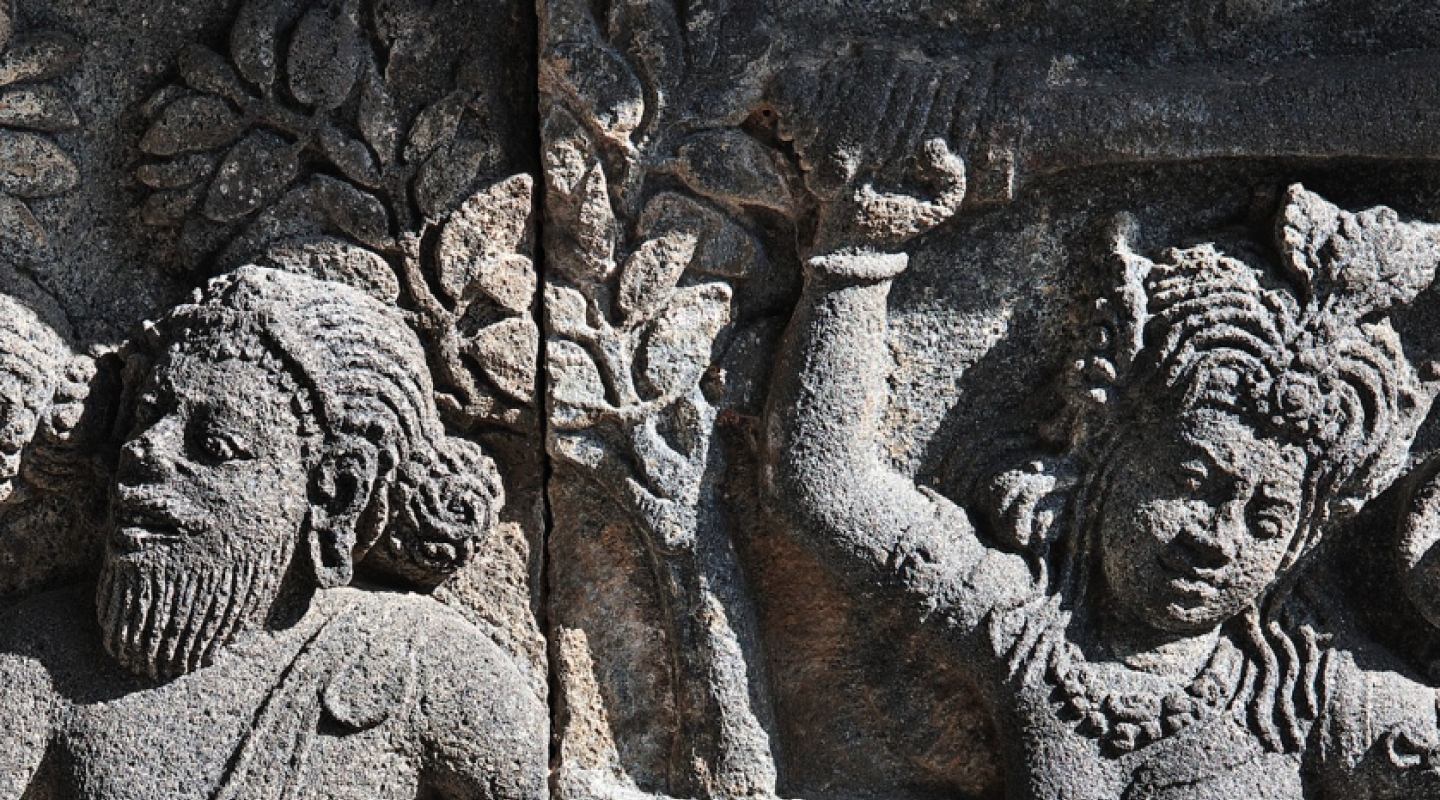
Before visiting, it's a good idea to understand the meaning of the Prambanan Temple reliefs to make your trip more meaningful. You can see the Prambanan Temple relief carvings on the three main buildings within the complex: the Vishnu Temple, the Brahma Temple, and the Shiva Temple. Let's learn the meaning of the Prambanan Temple reliefs in the review below.
Is the History of Prambanan Temple Still a Mystery?
If you hear about the history of Prambanan Temple, you might immediately remember the legend of Bandung Bondowoso who built a thousand temples in one night to marry Roro Jonggrang.
So, was Prambanan Temple really built by Bandung Bondowoso? It's important to understand that legends are a product of cultural thought passed down through generations, and are believed by many people to this day.
Interestingly, until now, no records or manuscripts have been found that provide information about who initiated the construction of Prambanan Temple and how long this temple complex took to be built.
However, archaeologists agree that the discovery of the Siwagrha inscription can be used as an official record of the history of Prambanan Temple. The inscription reads " wwalung gunung sang wiku," meaning it was written in 778 Saka, or 856 CE.
The Siwagrha inscription tells of the inauguration of Prambanan Temple during the reign of Rakai Pikatan. This structure was envisioned as a place to honor the house of Lord Shiva, hence the former name of Prambanan Temple, Siwagrha (house of Shiva).
After centuries of being hidden, Prambanan Temple was discovered by a Dutchman, CA. Lons, in 1733. It then began to attract world attention when it was rediscovered by Colin Mackenzie, a subordinate of Sir Thomas Stamford Raffles, during the British occupation of Java.
Restoration of Prambanan Temple began in 1918 but was halted in 1933 due to the war. In 1945, restoration was continued by local residents, and then inaugurated by President Sukarno in 1953. Restoration efforts to preserve this ancestral heritage continue to this day.
As a further effort, Indonesia and India are collaborating to continue the Prambanan Temple revitalization project. This was marked by a visit by President Prabowo Subianto and Indian Prime Minister Narendra Modi to Prambanan Temple to inaugurate the revitalization project.
According to PM Modi, Prambanan Temple is a symbol of Indonesian and Indian culture that deserves to be preserved. The complex features three main Trimurti temples and hundreds of ancillary temples.
The Meaning of the Reliefs of Prambanan Temple, Starting from the Story of Kresnayana to the Ramayana
It's unclear what technology was used in the past to create the beautiful carvings that we can still enjoy today. Prambanan Temple is closely linked to the Ramayana story, which is carved along the balustrades of the Trimurti temples (Brahma, Vishnu, and Shiva).
However, there's more to it than that. The Prambanan Temple reliefs also depict stories from the Kresnayana epic. Here's an explanation of each:
1. The Meaning of the Ramayana Relief
Ramayana reliefs are carved along the balustrades of the Shiva and Brahma temples, beginning at the Shiva temple and ending at the Brahma temple. The reliefs are read according to the direction of the circumambulation, which is clockwise.
The Emergence of a Giant Threat on Earth
At the Shiva Temple, there are approximately 24 relief panels related to the Ramayana. Within each relief panel, you can see two or three interconnected stories. In the first panel, the story begins with the appearance of a giant named Rahwana, who threatens the earth. Because of this, the gods begged Vishnu to descend to earth to destroy Rahwana.
Rama's Victory Over Shinta
In this story, Vishnu transforms into Rama to descend to earth and carry out his mission. This relief depicts Rama's power, successfully defeating various giants and ultimately winning a contest to win Shinta's hand. FYI , this contest is also attended by Rahwana, who also falls in love with Shinta. This is where Rama and Rahwana's conflict begins.
The next panel depicts the exile of Rama, Sita, and Lakshmana to the forest after Bharata is crowned king. During his exile, Rama defeats many demons and even banishes Crow Sura.
One interesting panel depicts the temptation of a female giant (raksasi) who wanted to marry Rama. This giant manipulated her form into a beautiful woman. However, like any gentleman , Rama realized he already had a wife and refused.
The Kidnapping of Shinta by Rahwana
This panel at the Shiva Temple also tells the story of the beginning of the conflict surrounding Shinta's kidnapping by Rahwana. In short, the tragedy began when Shinta desired a golden deer, and Rama went hunting to fulfill his wife's wish. He asked Laksmana to protect Shinta.
However, the unexpected happens. Shinta hears a scream and thinks it's Rama, so she sends Laksmana to check on him. When Shinta is alone, Rahwana takes the opportunity to kidnap her.
Meeting with Hanoman
The next relief panel at Prambanan Temple tells the story of Rama and Laksmana's journey after learning that their beloved has been kidnapped. During their journey, they are frequently attacked until they finally meet Hanoman.
His encounter with Hanoman leads Rama to Sugriwa, the Monkey King of the Kiskenda Kingdom, and he helps him reclaim the throne previously usurped by Subali. This dispute ends with Sugriwa's victory, aided by Rama.
Afterward, Rama told him about his mission to find his wife. Upon hearing this, Sugriwa immediately sent Hanoman to Ngalengka (Ravana's abode) to assess Shinta's condition.
The relief panel at the Shiva Temple ends with the story of the monkeys working together to build a bridge so Rama and Laksmana can reach Ngalengka to fetch Shinta. So, how did Rama and Shinta reunite in Ngalengka?
Rama Successfully Reaches Ngalengka
Entering the Brahma Temple, you'll see relief panels that continue the Ramayana story after Rama successfully reached Ngalengka. Inside the Brahma Temple, there are approximately 30 relief panels.
These panels tell in detail about Rama's obstacles and strategies for reaching the Ngalengka Kingdom. Rama's determination made Ravana send Dasamuka to meet Rama and tell him to surrender if he wanted to survive. However, Rama did not give up.
Kumbokarno, the Kind Giant
One of the relief panels tells the story of Kumbokarno, Rahwana's younger brother, whose good nature contrasts sharply with his older brother. He went to war not to defend Rahwana, but to defend his homeland, which was under attack. However, Kumbokarno was later killed in battle against Rama.
Rahwana's Defeat and Meeting with Shinta
After defeating Kumbokarno, Rama attacked Rahwana and defeated him. Afterward, Rama finally reunited with Shinta. Unfortunately, Rama and Shinta's love story was tested once again.
Contrary to the popular version, this relief shows that upon returning from Ngalengka, Rama did not question Shinta's purity. Instead, his doubts focused on Shinta's pregnancy and the origin of the child she was carrying.
Rama received a whisper that Shinta was pregnant (but not with his child), so he sent Laksmana to exile her. Instead of abandoning her, Laksmana rescued her by taking her to the forest to meet someone who could help her.
The Birth of Lawa and Kusya
While in exile, Shinta met a Resi who helped her and took her to a hermitage where she gave birth to twin sons, Lawa and Kusya. Shinta raised her two sons at the hermitage and received martial arts training.
One day, Rishi took Lawa and Kusya to Ayodhya (Rama's hometown) to show them that their father was a king. Along the way, Rishi taught them the story of the Ramayana.
After meeting Rama, Rishi explained that Lawa and Kusya were the sons of Rama and Shinta. Later, Lawa and Kusya were crowned kings of Ayodhya.
2. The Meaning of the Kresnayana Relief
The Kresnayana relief is carved along the balustrade of the Vishnu Temple. Broadly speaking, this relief tells the story of Krishna, from his birth to adulthood. Besides Rama, Krishna is also a reincarnation of the god Vishnu at different times.
The first panel begins with a description of the Mathura Kingdom led by King Ugrasena. The main conflict in the story of this relief is the ambition of King Kamsa who wanted to destroy Krishna so that he would remain immortal.
King Kamsa's Cruel Ambition
King Kamsa was known as the cruelest ruler of his time. He received a gift from Brahma that made him unable to be killed, except by a baby who would later be born with the name Krishna. Where, the baby will be born from the womb of his younger brother, Devaki. As a result, every baby born to Devaki was killed by King Kamsa.
At the birth of Balarama and Krishna, Devaki abandoned the two infants to prevent them from being killed by King Kamsa. However, King Kamsa discovered this, and he repeatedly sent disturbances to destroy Krishna. Unfortunately, these attempts were never successful.
The Defeat of King Kamsa
As he grew older, Krishna displayed various supernatural powers and courage in facing obstacles and evil creatures sent by Kamsa. Eventually, Krishna arrived in the kingdom of Mathura and defeated King Kamsa, restoring peace and allowing him to reunite with his family.
Trace the Story of Rama and Krishna in the Reliefs of Prambanan Temple!
That's an explanation of the meaning of the Prambanan Temple reliefs that you can learn. Understanding the meaning of the Prambanan Temple reliefs makes visiting this temple complex even more meaningful. Each carving carved into the temple walls holds stories, moral values, and life philosophies passed down from generation to generation.
To experience the beauty of the Ramayana, Kresnayana, and other historical carvings firsthand, be sure to plan your visit well. You can purchase Prambanan Temple tickets online through the official Injourney Destination Management website before your departure for a more convenient entry process and a more comfortable visit.
Come on , experience the splendor of the Prambanan Temple relief carvings firsthand right now!
Also read: Sandyakala Jonggrang, Presenting the Beauty of Legends and Culture